


Bird of Paradise: care guide for the Strelitzia Nicolai
This guide brings together everything you need to know to understand, care for and help a Strelitzia Nicolai thrive at home, from the basics of watering to more technical gestures like repotting.
Few houseplants can transform a room as instantly as the Bird of Paradise. Its immense fan-shaped leaves, which unfurl in graceful arcs and split with time like those of its cousin the banana tree, are enough on their own to bring a touch of jungle to even the most minimalist living room. Behind this spectacular silhouette hides a surprisingly easy-going plant, forgiving of forgotten waterings, tolerant of full sunlight and quick to grow.

Table of contents
- The essentials in 30 seconds
- Strelitzia Nicolai: portrait of a sculptural houseplant
- Ideal indoor conditions
- Choosing the right substrate and pot
- Common problems and solutions
- Keeping your Bird of Paradise beautiful and in great shape
- Propagating a Bird of Paradise: dividing the clump
- Bird of Paradise and pets
- Adopt your Bird of Paradise
- Bird of Paradise FAQ
The essentials in 30 seconds
| Latin name | Strelitzia Nicolai |
| Family | Strelitziaceae |
| Origin | South Africa |
| Light | bright and indirect, tolerates direct sun for short periods |
| Watering | about once a week in summer, every 10 days in winter |
| Humidity | moderate to high, regular misting of the foliage |
| Mature indoor height | up to 3 metres |
| Difficulty | beginner-friendly, low maintenance |
| Toxicity | sap irritating to pets if ingested |
Strelitzia Nicolai: portrait of a sculptural houseplant
The Bird of Paradise owes its name to its exotic flower, whose orange and blue petals draw the silhouette of a tropical bird's head. This spectacular bloom is actually more common on the Strelitzia Reginae, its more compact cousin variety. The Strelitzia Nicolai, by contrast, captivates above all through its architectural stance and its immense fan-shaped leaves, which can stretch beyond a metre in length. Its Latin name was given in 1858 by a botanist of the time, in honour of a queen and a grand duke, and earned it the evocative nicknames of Wild Banana and Traveller's Tree.
Native to the tropical regions of South Africa, it has established itself as one of the most sought-after large houseplants for four reasons. Its sculptural presence brings instant character to a living room, an entryway or a sunroom. Its rapid growth quickly rewards good care. Its tolerance of imperfect conditions, whether a missed watering or irregular light, makes it accessible to beginners. And its foliage, which naturally splits with age, gives it a unique character no artificial plant can ever match.
Ideal indoor conditions
Light: bright, indirect, ideally abundant
The Bird of Paradise loves bright, indirect light. Its ideal spot is near a large south, south-east or west-facing window, without exposing it to the burning rays of a summer afternoon. It even tolerates short periods of direct sun, making it one of the few large houseplants able to thrive in a very bright location.
It can also cope with shaded spots, though this noticeably slows its growth and produces smaller, sometimes paler leaves. In that case, pay close attention to watering: less light means less water.
One simple gesture preserves its harmonious habit: turn the pot a quarter turn every two to three weeks. The plant then grows symmetrically, without leaning towards the light source.
Watering: regular but never excessive
Watering is the trickiest part of caring for this plant, and the one that does the most damage when it's mismanaged. The golden rule fits in a single sentence: a Bird of Paradise would much rather go a few days thirsty than sit in waterlogged soil.
In spring and summer, water generously as soon as the soil is dry on the top three to five centimetres, usually once a week. Plan on about 0.75 to 1 litre of water for a plant around 1m30 tall, in two rounds spaced ten minutes apart so the substrate absorbs properly. In autumn and winter, space waterings every ten to fourteen days, letting the rootball dry out more between each.
Use room-temperature water that is low in lime and free of chlorine. Leaving a watering can open for twenty-four hours before use is enough. Never let water sit in the saucer or at the bottom of the decorative pot: it is the number one cause of root rot in Strelitzia.
Humidity: foliage that loves to be misted
Native to the tropical regions of South Africa, the Bird of Paradise enjoys a humid atmosphere. Mist its foliage several times a week, even daily in winter when heating sharply dries out the air. Also avoid placing the plant right next to a radiator or air vent, both of which quickly dry out the leaf edges.
To support ambient humidity over the long term, you can place a humidifier nearby or set a tray of damp clay pebbles under the pot, making sure the pot itself does not sit directly in water.
Temperature: between 18 and 28 °C all year round
The Strelitzia Nicolai thrives within the typical indoor temperature range of 18 to 28 °C. It tolerates cooler temperatures occasionally, but avoid dropping below 12 °C and steer clear of cold draughts in winter, which can quickly damage the foliage.
Fertilisation: once a month in spring and summer
This is a fast-growing plant, and therefore a hungry one. From March to September, apply a liquid fertiliser for green plants or a suitable organic feed once a month, diluted into the watering water. Stop fertilising in autumn and winter, during the resting period. Too much fertiliser can burn the roots and cause brown blotches at the leaf edges: when in doubt, under-dose rather than over-dose.
All year round, you can also mist your plant once a month with our foliar fertiliser to strengthen and protect it.
Choosing the right substrate and pot
The Bird of Paradise needs a substrate that is both rich and well-draining, able to retain moisture without ever suffocating the roots. A good homemade mix combines two-thirds of a quality green-plant compost with one-third drainage material: perlite, fine pozzolan or pine bark. Good drainage is essential to prevent rot, all the more so as the plant is watered generously in summer.
For the nursery pot, always choose one with drainage holes, slightly taller than wide to suit the Strelitzia's deep root system. Counter-intuitively, do not go too big: the Bird of Paradise actually prefers somewhat snug roots, and an oversized pot holds too much water, which eventually kills the plant. Plan on five extra centimetres of diameter at each repotting, no more. The decorative pot, on the other hand, can be chosen purely on aesthetics, as long as you raise the nursery pot inside it and never leave water standing at the bottom.
Common problems and solutions
The leaves split and fray: don't worry, it's normal
This is the first thing that worries new Strelitzia owners. Yet these splits are not a sign of poor health, quite the opposite. The fraying of the leaves is part of the plant's natural design. In its native environment, these openings let the wind pass through the foliage and prevent the large leaves from bending, breaking or uprooting the plant. Indoors, the phenomenon is less pronounced, but it's part of this variety's charm and ultimately sculpts each plant differently.

Brown, brittle leaf edges: under-watering or air that is too dry

When the leaf edges turn brown, thin and brittle, the cause is almost always the same: a lack of water combined with too dry an atmosphere, particularly in winter. The fix comes down to two simple gestures. Water more regularly for two weeks and mist the foliage every day. Move the plant away from radiators and air vents, which are often the root of the issue. Tips that are already brown won't turn green again, but you can trim them with scissors, following the natural curve of the leaf, without cutting into the still-green tissue.
Yellow, soft leaves: over-watering
Yellowing, wilted leaves that sometimes feel soft to the touch almost always signal too much water. Check the roots immediately by gently sliding the plant out of its pot. If they are firm and light-coloured, simply let the substrate dry out completely before going back to more spaced-out waterings. If they are brown, mushy or give off an unpleasant smell, rot has set in: cut away the damaged roots with clean secateurs, repot in fresh, well-draining substrate, and strictly limit watering until the plant recovers. In every case, get rid of any water sitting at the bottom of the decorative pot.
Leaves curling inwards: dehydration
When your Bird of Paradise's leaves curl inwards, it usually means it is thirsty or that the surrounding air has become too dry. To rehydrate it quickly, take the plant out of its decorative pot, place it in a shower, a bathtub or outside, and water generously. Then let the excess drain for thirty to sixty minutes before placing it back in its decorative pot. Depending on how dry it is, you can also soak the nursery pot in two centimetres of water for one hour maximum. The plant usually perks back up within a few days.
Mealybugs: the number-one pest of the Strelitzia
Mealybugs, those small white cottony clusters that hide on the underside of leaves and at the base of stems, are the most frequent pests on the Bird of Paradise. Inspect your plant regularly so you can spot them early: a problem caught in time clears up in a few weeks, while an advanced infestation can weaken the plant for the long term.
As routine, to prevent infestations. Add L'Original, our natural olive-oil black soap, to your monthly foliage cleaning. Mist it directly on the leaves once or twice a month, focusing on the underside, then wipe with a soft cloth. Made with just four ingredients, L'Original works as a gentle insecticide against mealybugs, as a natural fungicide and as a leaf shine. It's the background routine that keeps the plant clean and unappealing to pests.
In case of an advanced infestation, to treat. When the white clusters spread visibly, come back despite the routine, or appear on several spots of the plant, switch to a stronger treatment with our Super Neem Oil. This natural insecticide and fungicide, based on neem oil and lemon eucalyptus, is sprayed directly on leaves, stems and substrate, with no rinsing or wiping required. Apply it two to three times a week until the mealybugs are completely gone, then switch back to a preventive rhythm of one to two applications a month to avoid a relapse.
Keeping your Bird of Paradise beautiful and in great shape
Pruning: just enough
The Bird of Paradise doesn't need structured pruning like a shrub, but a few well-placed gestures make a real difference over time. With clean, sharp secateurs, cut the oldest or least attractive stems at the base: the plant immediately redirects its energy towards the younger shoots, which become more vigorous and luminous. On otherwise healthy leaves marked by a few imperfections at the edges, a precise cut with scissors following the natural shape of the leaf is enough to maintain a neat silhouette.

Cleaning the foliage: a monthly gesture
The Strelitzia's large leaves quickly accumulate dust, which reduces photosynthesis and dulls the plant's overall look. Once a month, lightly mist the foliage with diluted black soap and run each leaf between two soft, damp cloths, on both the upper and lower sides. Finish with a misting to rehydrate. This simple ritual is enough to keep the foliage bright and in full health.
Repotting: every two to three years
Houseplants grow more slowly than in the ground, and the Bird of Paradise really only needs to be repotted every two to three years, ideally in spring. Three signs tell you it's time: roots visible at the surface of the substrate, roots spiralling around the nursery pot, or growth slowing down for no obvious reason despite unchanged care.
If you'd like the plant to grow taller, choose a nursery pot five centimetres larger in diameter than the current one. If you'd rather keep it at its current height, reuse the same pot but renew all the substrate to refresh the nutrients.
We also recommend a top-dress once a year, which simply means replacing the top layer of substrate to renew part of it.
The procedure itself is simple.
- Lay newspaper on the floor,
- take the plant out of its pot and gently untangle the roots to remove the old substrate.
- Trim away any dry or rotten roots with clean secateurs.
- Line the bottom of the new pot with fresh compost for green plants.
- Place the plant in the centre, fill with fresh substrate and pack it firmly so the plant doesn't move,
- water generously,
- then place it back in its usual spot in bright, indirect light.
Allow two to four weeks for the plant to settle and start growing again.
Propagating a Bird of Paradise: dividing the clump
Unlike other houseplants, the Bird of Paradise cannot be propagated from a stem or leaf cutting. The only reliable method is dividing the clump, reserved for mature plants that are well filled with stems, or clearly cramped in their pot.
Set up a workspace covered with newspaper and take the plant out of its pot: you'll then discover a dense mass of intertwined roots. Identify the stems that share a single root system and those that can be detached cleanly without breaking the central rootball. Untangle the roots by hand whenever possible, and use clean, sharp scissors for the more stubborn sections. Favour pieces with at least two stems and a strong root network, which gives the best chance of a quick recovery.
Settle each section in a pot filled with fresh, well-draining substrate, pack it firmly and water generously. For the first four to six weeks, keep the substrate slightly damp at all times without ever soaking it, and place the new plants in bright, indirect light, away from direct sun, while the roots take hold.
Bird of Paradise and pets
The sap of the Bird of Paradise can irritate cats, dogs and other pets if ingested. It is not a highly toxic plant, but it's best to keep it out of reach of animals that tend to nibble on leaves.
If you're looking for a houseplant that is 100% safe for your companions, browse our selection of pet-friendly plants.
Adopt your Bird of Paradise
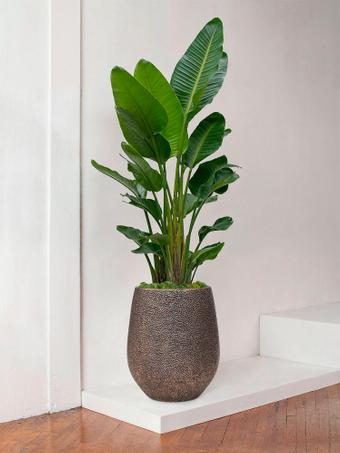
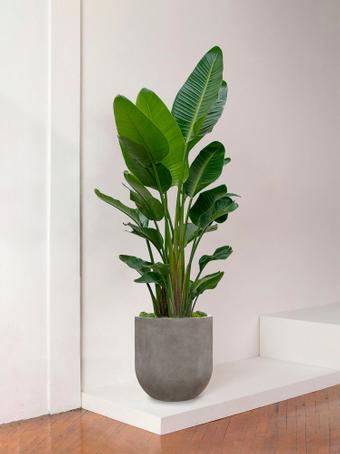
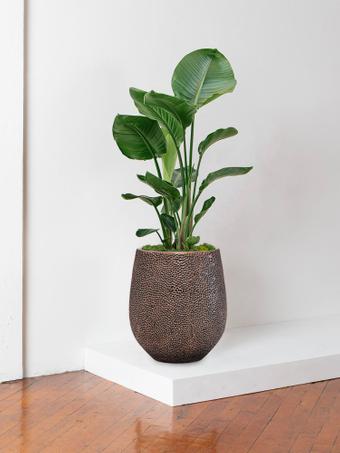
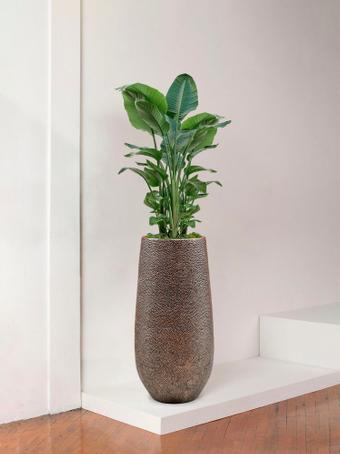
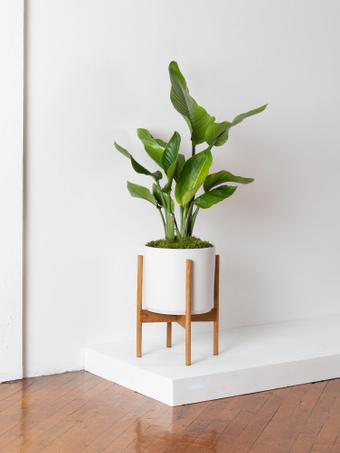
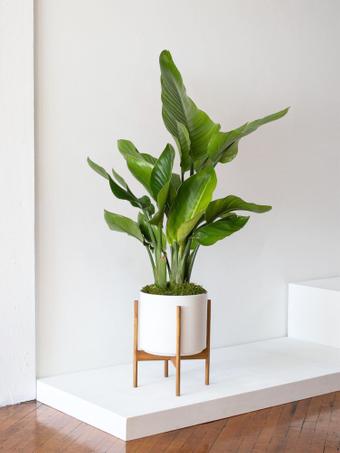
At Léon & George, every Bird of Paradise is hand-picked from European MPS-A certified growers, repotted, cleaned and inspected. The plant arrives ready to place, with access to our Plant Doctor service to support you over time.
Bird of Paradise FAQ
Is the Bird of Paradise easy to care for?
Yes, the Strelitzia is considered an easy-going plant. It needs suitable light, a well-draining substrate, controlled watering and regular misting.
How often should you water a Bird of Paradise?
On average once a week in spring and summer, and every ten to fourteen days in autumn and winter. The most reliable rule is to touch the substrate: water when the soil is dry on the top three to five centimetres.
Why are the leaves of my Bird of Paradise splitting?
It's completely normal. The fraying of leaves is part of the Strelitzia's natural design. In its native environment, these splits let the wind pass through and prevent the leaves from breaking. It's not a sign of poor health, but rather the expression of a mature plant.
Why are my Strelitzia's leaves turning yellow?
Yellowing leaves are almost always a sign of over-watering. Check the roots, let the substrate dry out completely, then go back to a more spaced-out watering rhythm. If the roots are soft or brown, repot in fresh, well-draining substrate.
Will my Bird of Paradise bloom indoors?
Blooming of the *Strelitzia Nicolai* indoors remains rare and late: it can occur after several years, and only if the plant gets plenty of light (ideally filtered full sun), a slightly snug pot, regular feeding in spring and summer, and a stable temperature. The *Strelitzia Reginae*, more compact, blooms more easily in a pot and is the one you usually see flowering in homes. If blooming is your main goal, the Reginae is the better choice.
How tall can a Bird of Paradise grow indoors?
Under good conditions, a *Strelitzia Nicolai* reaches 2.5 to 3 metres tall indoors, with leaves up to a metre long. The *Strelitzia Reginae* tends to top out around 1.50 m.
What's the best location for a Bird of Paradise?
Bright, indirect light, ideally near a south, south-east or west-facing window. The plant tolerates occasional direct sun, but avoid it in mid-summer to prevent leaf burn. A shadier spot is possible but will slow the plant's growth. Watering needs particular attention there: less light means less water.
Is the Bird of Paradise toxic?
Its sap can irritate pets if ingested. For humans, the plant is not considered dangerous, but it's best kept out of reach of young children.
How do I know when to repot my Bird of Paradise?
If the roots appear at the surface of the substrate or spiral around the pot, and growth slows down despite good care, it's time. Repot ideally in spring, in a pot five centimetres wider.
What substrate should I use for a Strelitzia Nicolai?
A mix of two-thirds quality green-plant compost and one-third drainage material (perlite, fine pozzolan or pine bark) is ideal. The goal is a substrate that is both rich and well-draining, holding moisture without suffocating the roots.